




...To get all news updates, Join our WhatsApp Group (Click Here)
Connect with us on Linkedin (Click Here)
As Oyo State inches toward the 2027 general elections, a quiet but potent conversation is gaining ground within the Peoples Democratic Party. The danger of a “disguise candidate.” It is a phrase now echoing across party secretariats, ward meetings, and stakeholder lounges from Ibadan to Ogbomoso. The concern is not about open aspirants who declare their interest, but about individuals whose ambitions are being warehoused, projected, and marketed by powerful proxies while they publicly maintain neutrality. For the Oyo State Governor, Engr. Oluseyi Makinde FNSE, his close ally Seye Famojuro, and the broader People’s Democratic Party (PDP) stakeholders, the warning from party elders is simple, 2027 may be decided not by who campaigns loudest, but by who is being positioned silently.
The Anatomy of a ‘Disguise Candidate’ in Oyo Politics
Oyo politics has a long memory of disguised candidacies. From the Second Republic to the Fourth Republic, godfatherism and proxy politics have repeatedly shaped outcomes. A familiar pattern emerges, a political heavyweight insists he is not interested, avoids confrontation, yet allows his structure, resources, and loyalists to build momentum around him. By the time the race becomes official, the ground has already shifted. In 2003, 2011, and 2019, Oyo witnessed versions of this script where “Consensus” was actually a choreographed succession. The consequences were internal fractures that cost parties at the polls.
Today, whispers in People’s Democratic Party (PDP) circles suggest that history may be repeating itself. Many party members are openly saying “he is the one who will pick the governorship candidate for Seyi Makinde,” referring to the influence of key allies and the perception that the governor’s eventual anointing will not be his alone. The name most frequently attached to that influence in street talk is Seye Famojuro, a businessman and long-time confidant of the governor. Whether accurate or not, the perception has created a political market for aspirants who avoid the spotlight but seek Famojuro’s nod, hoping it translates to Makinde’s endorsement.
Makinde’s Succession Dilemma: Legacy vs. Liability
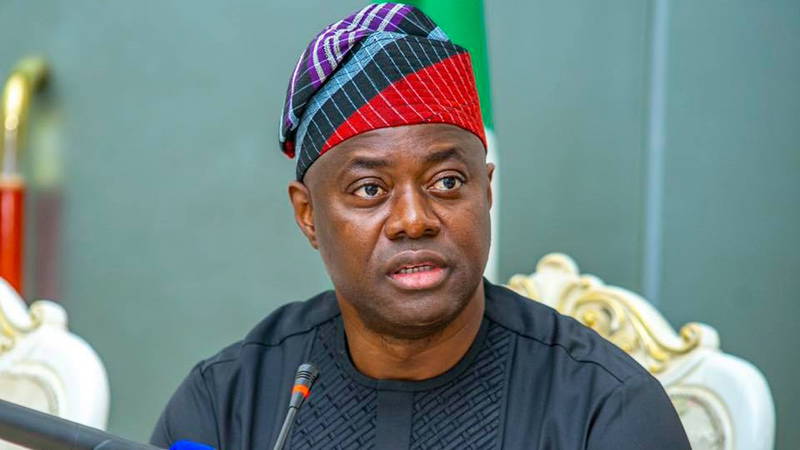
Governor Seyi Makinde will leave office in 2027 with a record that has reshaped Oyo’s political economy. Infrastructure expansion, civil service reform, and a deliberate attempt to demystify governance. But succession remains his toughest test. The PDP in Oyo has historically struggled with post-incumbent cohesion. After Senator Rashidi Adewolu Ladoja, the present Olubadan of Ibadanland in 2007 and late Chief Adebayo Alao-Akala in 2011, the party splintered under the weight of competing ambitions. Seyi Makinde’s ability to keep the party intact will define whether his legacy is institutional or personal.
This is where the “disguise candidate” becomes a risk. If a candidate emerges who is seen as imposed by a small kitchen cabinet rather than produced by broad consultation, the People’s Democratic Party faces three immediate consequences. 1 Litigation from aggrieved aspirants; 2 Defection of blocs who feel shut out of the process; and 3 Voter apathy from a base that has grown intolerant of godfather politics. The irony is that Governor Seyi Makinde himself rode to power in 2019 on anti-establishment sentiment. A succession perceived as a closed arrangement could hand the opposition its most potent campaign message.
Seye Famojuro: Influence, Perception, and the Proxy Question
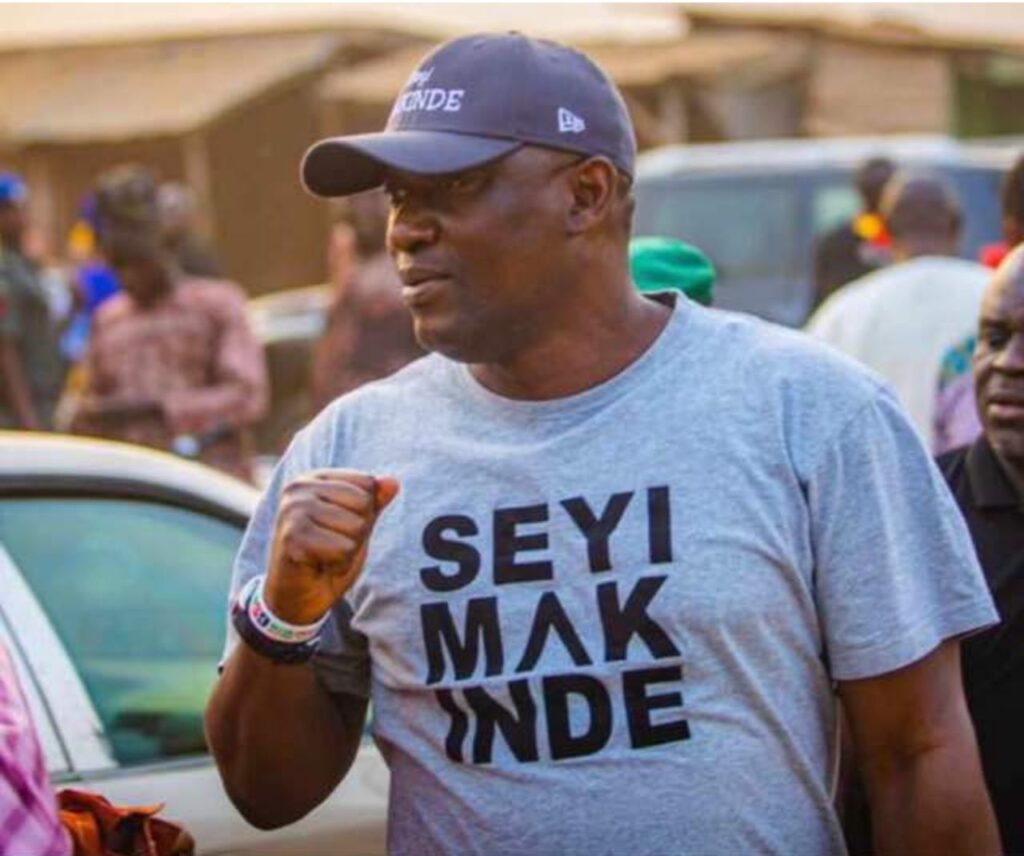
Seye Famojuro holds no elective office and no official party position. Yet within Oyo PDP, his proximity to power is unmatched. That proximity has made him a lightning rod. To supporters, he is a stabilizing force who ensures loyalty and execution. To critics, he represents an unelected centre of power whose preferences can make or mar ambitions. The current anxiety is that aspirants are now lobbying Seye Famojuro instead of local government leaders, ward executives, and statutory delegates. The party structure, in effect, is being bypassed.
The danger for Governor Seyi Makinde is guilt by association. If a disguised candidate emerges and is traced to Famojuro’s camp, the public narrative will be that the governor outsourced his succession which is very dangerous in terms of loyalty to the state and Makinde himself. For Famojuro, the danger is overexposure. Political allies who become kingmakers without constitutional cover often become targets when arrangements collapse. For stakeholders, the danger is that genuine consensus is replaced by curated consensus. 17 votes out of 19 at a meeting, for instance, looks like unity, but only if the room itself was truly representative.
PDP’s Internal Cracks Ahead of 2027
The People’s Democratic Party in Oyo State is not entering 2027 as a monolith. Three fault lines are already visible. First is the Ibadan vs. Ogbomoso/Oke-Ogun/Ibarapa balance. Power rotation remains an emotive issue, and any candidate seen as “Ibadan-only” triggers resistance. Second is the returnee vs. loyalist divide. Politicians who left the party between 2015 and 2019 and returned after Seyi Makinde’s victory are demanding equity, while those who stayed and worked tirelessly for the emergence of Seyi Makinde through the wilderness years are demanding reward. Third is the youth bloc vs. the elders’ forum tension. The party’s most active mobilisers are under 40, but decision-making is still domiciled with elders who control delegates.
A disguised candidate aggravates all three cracks. Because such a candidate does not campaign openly, he cannot address zoning agitations, cannot reconcile old and new members, and cannot sell a vision to the youth base. He arrives at the end of the process as a fait accompli. The PDP in Lagos, Ogun, and Osun has lost elections this way in the last decade. Oyo PDP leaders who lived through the 2011 and 2015 losses are raising the alarm early.
The Governorship Aspirants’ Calculation

At least 11 names are in quiet circulation for the PDP ticket. They include the speaker of the Oyo State House of Assembly, Rt. Hon. Adebo Ogundoyin, Otunba Oluseye Opatoki, Federal Lawmaker, Stanley Adedeji Olajide Odidiomo, Special Adviser on security, CP Fatai Owoseni (Rtd), Debo Akande, and Bimbo Adekanmbi among others. The open aspirants are testing the waters with empowerment programmes and consultative visits. The disguise aspirants are doing neither. Instead, they are funding groups, placing loyalists in strategic ward positions, and waiting for the “signal” from Agodi, Kolapo, Ikolaba or Bodija. This creates a two-track primary. One in public, one in shadows. When the two tracks collide, the party usually bleeds.
The consequence for Oyo State is governance paralysis. From late 2025, commissioners and advisers will divide into camps. Policy attention will shift to delegate capture. Contract awards will be scrutinised for political intent. The state has seen this movie before. Between 2005–2006 and 2010–2011, governance stalled as succession battles consumed attention. With federal allocation tightening and IGR pressures rising, Oyo cannot afford two lost years.
Why Caution Is Now Strategic
For Governor Makinde, caution means three things.1. Open the succession process early so no one can claim ignorance; 2. Insist that all aspirants, including those close to him, submit to ward and local government tours; 3. Publicly define the criteria for his support — capacity, electability, and ability to keep PDP united, not proximity. For Seye Famojuro, caution means stepping back from candidate speculation and allowing the party’s statutory organs to lead. His influence is best deployed after a candidate emerges, not before.
For stakeholders, caution means auditing every “consensus.” If 17 votes emerge from a room of 19, the question must be: who selected the 19? Were women, youths, and all federal constituencies represented? Was it consensus or confirmation? The Elders Forum communiqué that affirmed a federal representative as consensus candidate is a case study. It worked because it was transparent and the numbers were public. Any process that cannot survive sunlight will not survive a general election.
The APC Factor and the Bigger Picture
Oyo All Progressive Congress APC is watching. Its own governorship field is unsettled, with a Guber Aspirant and others already warning that “APC has no candidate yet.” But the APC’s historical advantage is that it punishes PDP disunity swiftly. In 2011, 2015, and during the 2023 presidential round, PDP cracks became APC openings. A disguised candidate that fractures PDP in 2026 hands the APC a turnout and messaging edge in 2027. The electorate in Oyo Central, Oyo North, and even Ibadan less-city are no longer automatic for any party.
The stakes therefore go beyond PDP. They affect the policy continuity of the state. Road projects, LAUTECH funding, pension reforms, and security architecture require a transition that is politically stable. A disputed primary produces a disputed candidate who produces a divided campaign. Divided campaigns lose, and when they lose, projects stop.
Conclusion: Disguise Is Not Strategy
In politics, silence can be a tactic, but it is rarely a strategy. The “disguise candidate” model assumes the electorate is passive and the party is pliant. Oyo State in 2024 is neither. The voter is more volatile, the media is more fragmented, and the cost of imposition is now electoral, not just internal.
If Governor Seyi Makinde wants his successor to win, and if Seye Famojuro wants his reputation preserved, the path is not secrecy but structure. Declare the rules, widen the room, and let ambition wear its own face. Because in Oyo 2027, the most dangerous opponent will not be from another party. It will be the suspicion that the people’s choice was never really theirs.
And once that suspicion sets in, even the best candidate starts the race with a deficit.
Prince Adetunji Fabode is a journalist and Publisher of Naija TODAY News

...To get all news updates, Join our WhatsApp Group (Click Here)
Connect with us on Linkedin (Click Here)